November #1: Seasonal Affective Disorder, Training Opportunities, Reminders
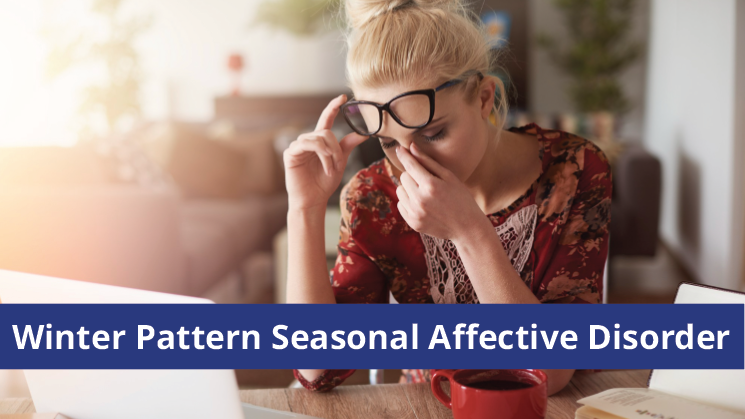
As winter approaches, it’s important to remember how costly slip, trip and fall claims can be. Many employees work outdoors, but even walking from a vehicle into an office Late fall and winter bring weather changes and joyous holidays. For some of us, however, this time of the year can also bring a form of mental health depression — Seasonal Affective Disorder (SAD).
SAD is a distinct form of clinical depression characterized by its recurrent seasonal pattern, most commonly initiating in the fall or winter and resolving in the spring or summer. According to the American Psychiatric Association (APA), SAD is officially classified as a major depressive disorder. Triggered by reduced seasonal daylight, the condition stems from biological shifts including disrupted circadian rhythms, decreased serotonin activity, and overproduction of melatonin.
Common Symptoms: The symptoms of winter-pattern SAD typically build gradually and impact daily functioning. While it shares core characteristics with major depression, the National Institute of Mental Health (NIMH) emphasizes several symptoms that are highly unique to winter-pattern SAD:
- Persistent Low Mood: Feeling continuously sad, anxious, empty, or hopeless during the day.
- Oversleeping: Experiencing excessive fatigue and daytime drowsiness, with significant difficulty waking up in the morning despite sleeping longer hours.
- Appetite and Weight Changes: Severe cravings for carbohydrate-rich foods, leading to overeating and seasonal weight gain.
- Extreme Fatigue: Having chronically low energy or a feeling of heavy limbs, making even basic tasks require immense effort.
- Social Withdrawal: Losing interest in hobbies once enjoyed and withdrawing from social circles.
- Cognitive Difficulties: Struggling with focus, concentration, memory, or basic decision-making.
Effective Treatments: If you, a family member or a friend may be dealing with SAD, don’t suffer in silence. Speak with your doctor about a course of treatment. In the United States, medical guidelines recommend evidence-based interventions that can be utilized individually or combined to optimize clinical outcomes:
- Light Therapy (Phototherapy): This serves as a primary, first-line treatment for winter-pattern SAD. Patients are exposed to lighting that mimics natural outdoor light to help reset the biological clock and boost serotonin levels.
- Psychotherapy: Cognitive Behavioral Therapy (CBT) specifically adapted for SAD (CBT-SAD) is highly effective. This behavioral approach focuses on identifying and replacing negative seasonal thought patterns while proactively scheduling engaging indoor or outdoor activities.
- Pharmacotherapy: Antidepressant medications are frequently prescribed to correct underlying chemical imbalances.
- Lifestyle and Environmental Modifications: Increasing natural daylight exposure by taking morning walks or organizing workspace environments near windows provides a functional baseline boost. Regular physical exercise, structured sleep routine, and maintaining social interactions can help to minimize severe symptom presentation.
Sources:
- National Institute of Mental Health (NIMH). Seasonal Affective Disorder. Retrieved from NIMH Publication Page.
- American Psychiatric Association (APA). Seasonal Affective Disorder (SAD). Psychiatry.org Patient and Family Resources.
- MedlinePlus (National Library of Medicine). Seasonal Affective Disorder. MedlinePlus Health Topics.
- Mayo Clinic. Seasonal affective disorder (SAD) – Symptoms & causes. Mayo Clinic Conditions Catalog.
IMWCA Welcomes Branten Eckhart

IMWCA is pleased to welcome Branten Eckhart as its new Safety and Risk Improvement Adviser. In this role, Branten will conduct on-site safety audits, help members identify and reduce workplace risks, and provide education and guidance on safety and loss control.
Branten brings a background in military intelligence and public service. He served 12 years as a Cryptologic Technician in the U.S. Navy’s Information Warfare community and later worked as a Reemployment Case Manager for the State of Iowa.
Please join us in welcoming Branten to the IMWCA team!

Register Now: Supervisor Training
Handling employee performance and conduct issues can be daunting, uncomfortable, and confusing. IMWCA’s Supervisor Training Course provides new and experienced supervisors with tools and tips for managing inadequate performance and misconduct early on, when correction is easier.
December 3 – Carroll
Reminder: Update Your Company Nurse Posters
As of July 1, each IMWCA member organization was assigned its own dedicated Company Nurse phone number. Please make sure your injury reporting posters, wallet cards and stickers display your organization’s updated number and QR code.
If you have not updated your poster, please contact Company Nurse. Share the updated information with employees so they know how to report a workplace injury.
Claims 101 Webinar

During the 2026 Claims 101 Webinar, we explored the workers’ compensation system, the employer’s role in the process, the importance of Company Nurse, and the investigation process.
Have a training topic in mind for IMWCA University, a webinar or an in-person session? We’d love to hear your ideas!