September #1: OSHA Top 10 Safety Citations, Online Training Resources, What to Expect From Your Agent
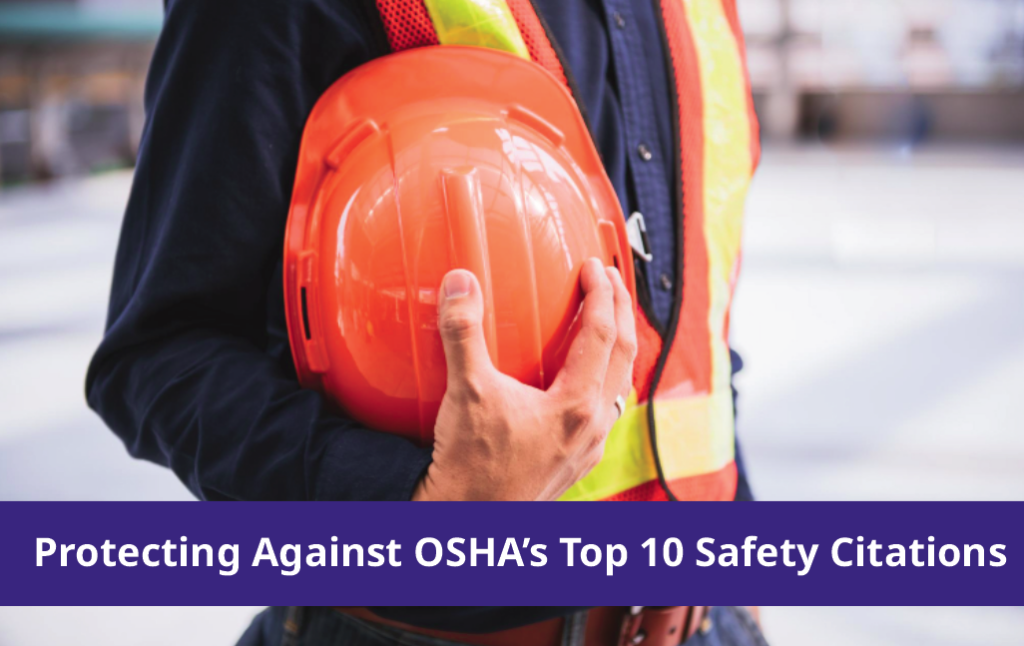
OSHA’s most cited standards reveal where workplace safety programs are most likely to fall short. We highlight practical steps employers can take to strengthen prevention efforts before these hazards lead to injuries or citations.
The Occupational Safety and Health Administration (OSHA)’s standards prevent injuries, illnesses, and even fatalities related to common job hazards. Its annual list of most frequently cited standards can help employers more easily recognize these hazards and understand how to address them in the workplace.
“The most effective safety programs do more than respond to hazards after they appear — they build accountability into everyday operations,” said Kevin O’Sadnick, Director – Risk Control at Safety National. “Proper training helps employees recognize hazards and understand how to use protective equipment correctly, while regular inspection of safety devices ensures those controls are ready to perform when they are needed most.”
Here, we identify OSHA’s most cited violations and how employers can mitigate these risks.
1. Fall Protection
Guardrail systems, safety nets, or personal fall arrest systems can prevent falls in the workplace. Employers should provide walking and working surfaces that protect against falls from more than six feet. Whether that includes working at the edge of wells, pits, shafts, or surfaces like steep roofs, formwork, or hoist areas, all employees should be protected from a fall and from falling objects.
2. Hazard Communication
Employers should keep a running inventory of all on site chemicals, ensure they are all labeled with hazard statements, and assess the exposure to employees. Consider how often the chemical is used and who is using it. Elimination or substitution options can help control chemical risks in addition to proper engineering controls, training, personal protective equipment (PPE), and housekeeping.
3. Ladders
Standard materials for ladders may vary along with their size and shape. However, every ladder should provide a safe climbing surface with rungs that are intact and clear of debris and slipping hazards. Employees must use ladders as intended, while always maintaining three points of contact: either one hand and both feet, or two hands and one foot.
4. Control of Hazardous Energy
More commonly known as a lockout/tagout (LOTO) standard, this citation involves machinery unexpectedly starting up or releasing stored energy while someone is servicing it. Employers must have appropriate lockout or tagout devices for energy isolating devices, like a manually operated electrical circuit breaker, a disconnect switch, or a line valve. LOTO procedures are critical during a device’s maintenance and repair, protecting employees from electrocution, amputations, and crushing injuries.
5. Respiratory Protection
Breathing air contaminated by harmful dust, fumes, smoke, or vapor can be prevented through the use of appropriate personal protective equipment (PPE). When general control measures, like ventilation and substitution of less harmful materials, are not applicable, then employers should provide the appropriate respirator to employees working in these conditions. Depending on the environment, employees might need a respirator that is air-purifying or atmosphere-supplying.
6. Scaffolding
PPE, like personal fall arrest systems, are vital for preventing falls from scaffolding. Employers should also follow the 3-to-1 rule in the design of any scaffolding, which sets the total working height of a freestanding scaffolding tower at three times the distance of the narrowest side of the base. OSHA’s standard also includes many specific guidelines for the varying types of scaffolding, but all scaffolding should be constructed and loaded in accordance with its particular design.
7. Fall Protection Training
Protecting employees from falls is critical, but workers must also fully understand how to use fall protection, including the use of guardrails, personal fall arrest systems, safety nets, warning lines, and safety monitoring. Employers are responsible for providing training programs for employees exposed to fall hazards and retraining them where necessary.
8. Powered Industrial Trucks
Forklift safety starts with proper operation training, particularly pertaining to blind spots, intersections, and other dangerous areas. Employees should never exceed the rated load and ensure that the load is stable and balanced. Maintaining visibility at all times is key in incident prevention.
9. Eye and Face Protection
It is not enough to solely provide the correct PPE for an employee’s face or eyes; it must also fit correctly. Protective eyewear may need side protection in the event a worker is exposed to flying objects. Employees working with molten metal, liquid chemicals, acids or caustic liquids, chemical gases or vapors, light radiation, or flying particles are especially at risk.
10. Machine Guarding
Operators and other employees can all be injured by hazards created by a machine’s point of operation, ingoing nip points, rotating parts, flying chips, and sparks. Barrier guards, two-hand tripping devices, and electronic safety devices can prevent incidents.
Originally published in Safety National’s Carrier Chronicles
Online Training Resources
IMWCA offers a variety of online training opportunities to help members build and maintain a strong safety culture. From quick training videos and virtual round tables to the LEARN online training platform, members can access practical safety information and training when it works best for them. These resources cover a wide range of workplace safety topics and provide flexible options for both employees and supervisors.
More Than a Renewal: What Should You Expect from Your Agent?

For cities, counties, and other 28E organizations participating in IMWCA, the relationship with an insurance agent should be about more than delivering a renewal estimate each year.
IMWCA already provides members with workers’ compensation coverage, claims expertise, risk control services, and resources specifically designed for Iowa public entities. The agent’s job isn’t to duplicate those services. It’s to understand the member, know the resources available, and help bring the two together.
So, what should that relationship look like?
Understand the Member’s Operations
One of the unique things about working with public entities is the variety of operations under one roof.
A city or county can almost be viewed as a collection of micro-industries. Depending on the organization, you may have law enforcement, corrections, EMS, construction, streets and secondary roads, parks and landscaping, building inspection, utilities, office employees, and more.
Each operation has its own workers’ compensation exposures and its own concerns.
An engaged agent should be able to “talk the talk” with different department heads. That doesn’t mean being an expert in every job performed by a public entity, but it does mean taking the time to understand what employees do, where injuries are occurring, and what keeps department leaders up at night.
That knowledge helps the agent, member, and IMWCA focus their time and resources where they can have the greatest impact.
Help Navigate Difficult Claims
Most public entities don’t have a full-time risk manager dedicated to workers’ compensation. Claims and safety responsibilities often fall to HR, a city clerk, county auditor, or another administrator who has plenty of other responsibilities competing for their attention.
That’s where an agent can help.
When a claim becomes complicated or a member feels like it isn’t moving in the right direction, the agent can serve as a facilitator between the member and IMWCA claims team.
The agent isn’t there to tell the claims examiner how to handle a claim. Instead, our role is often to get the right people talking, help clarify concerns, ask questions, and make sure everyone is working from the same information.
Sometimes a 15-minute conversation with the right people can resolve an issue that has been frustrating everyone for weeks.
Review Claims Before the Experience Modification Factor Calculation
Agents should also understand how claims ultimately affect a member’s workers’ compensation costs.
One important opportunity is reviewing open claims before IMWCA promulgates the member’s experience modification factor.
That doesn’t mean asking IMWCA to reduce reserves simply to improve an experience mod. Reserves need to accurately reflect the expected cost of a claim. But it is worth reviewing open claims, understanding the current status, and discussing any reserves that may warrant another look based on new information or developments.
The key is timing. Those conversations are much more productive before the experience mod is calculated than after.
Turn Loss Trends Into Solutions
An agent should also be looking beyond individual claims.
Are we seeing an increase in strains and sprains? Is one department experiencing more injuries than others? Are employees getting hurt performing the same task? Has the organization added a new operation or exposure?
Once we identify a trend, the next question should be: What can we do about it?
This is where the partnership between the member, agent, and IMWCA Risk Control can be especially valuable.
Agents should work with IMWCA Safety & Risk team to understand what factors are driving losses and help develop practical solutions. Sometimes that means additional training. Other times it may mean reviewing procedures, bringing in additional resources, or simply having a conversation with a department about how the work is being performed.
The goal isn’t to eliminate every injury. That isn’t realistic. The goal is to understand where the opportunities are and continually work toward a safer workplace.
Stay Connected With IMWCA
A good relationship with the IMWCA team is important for agents, too.
IMWCA University is a great opportunity for agents to stay engaged with current issues and hear about challenges other Iowa public entities are facing.
Agents should also make an effort, when possible, to participate in their members’ annual risk review with IMWCA Safety & Risk team. It’s an easy way to hear firsthand what is happening within the organization, understand where there may be concerns, and identify areas where the agent can help.
The better the communication between the member, IMWCA, and the agent, the easier it is to get the right resources in front of the right people.
Expect More Than a Renewal
There are many different agency models serving Iowa public entities. Some members value having a local agent who knows their community. Others may work with agencies that have larger teams or additional risk management resources. Both models can work.
Regardless of agency size, members should expect engagement.
At a minimum, an agent should meet with the member before renewal, understand what has changed during the year, discuss claims and loss trends, identify areas where the member wants to improve, and help connect the organization with IMWCA resources that can make a difference.
The agent’s compensation is already built into IMWCA’s predetermined commission structure. Members should expect value from that relationship throughout the year—not just an email with a renewal estimate before July 1.
At its best, the relationship between a member, IMWCA, and its agent is a partnership.
The agent knows the member. IMWCA brings claims and risk control expertise. The member understands its people and operations better than anyone.
When all three are communicating and working together, we’re in a much better position to solve problems, control workers’ compensation costs, and, most importantly, help public employees go home safely at the end of the day.
Brad Bengtson, CLCS, CAWC, PQA+ is a Risk Management Specialist with TrueNorth