


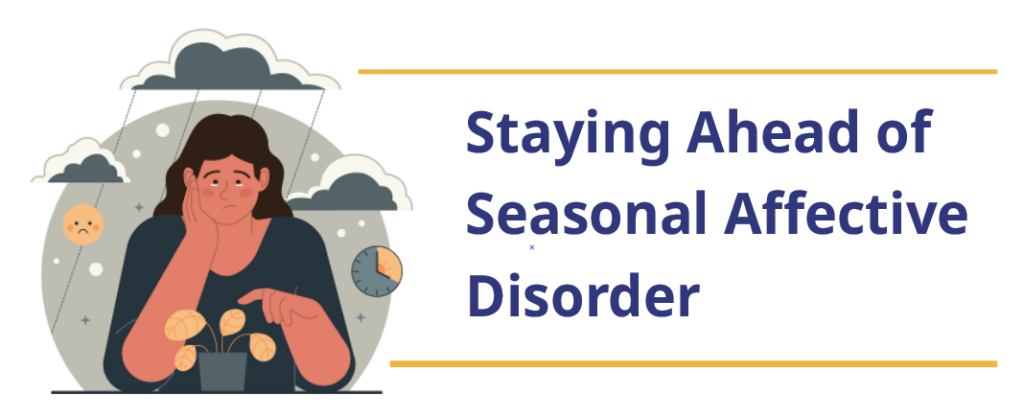
Seasonal Affective Disorder (SAD), according to the National Institute of Mental Health, is a type of depression characterized by a recurrent seasonal pattern, with symptoms lasting about 4−5 months out of the year. SAD can occur during both the fall/winter and spring/summer seasons. The signs and symptoms of SAD include those associated with depression as well as disorder-specific symptoms that differ for winter-pattern versus summer-pattern SAD.
Symptoms: The following is a list of general symptoms that can indicate you are being impacted by SAD:
- Feeling listless, sad or down most of the day, nearly every day.
- Losing interest in activities you once enjoyed.
- Having low energy and feeling sluggish.
- Having problems with sleeping too much.
- Experiencing carbohydrate cravings, overeating and weight gain.
- Having difficulty concentrating.
With the onset of the fall and winter season, it is important to understand the underlying reasons that can lead to SAD and to be able to identify the symptoms. The change in seasons can result in changes to our body chemistries that can affect mood and sleep patterns. SAD can lead to depression.
Fall and Winter SAD Symptoms. The Mayo Clinic lists the following as specific symptoms associated with SAD in the fall and winter seasons:
- Oversleeping
- Appetite changes, especially a craving for foods high in carbohydrates
- Weight gain
- Tiredness or low energy
If you are experiencing the above symptoms, promptly contact your health care professional. There are strategies that can be employed to help manage SAD and reduce its impact on your overall well-being. These strategies vary, and what works for one person may not for another.
Sources:
https://www.nimh.nih.gov/health/publications/seasonal-affective-disorder
https://www.mayoclinic.org/diseases-conditions/seasonal-affective-disorder/symptoms-causes/syc-20364651

Recorded Trainings Available
Find recordings of our recent trainings, all available for members to watch at any time.
- 2025 Virtual Round Tables, including the newest session on the Importance of Updated and Enforceable Safety Policies
- 2025 Incident Analysis Regional Training
These are great resources to support your safety program and staff development.

Injury Reporting: What to Do When Symptoms Appear Later or Don’t Fully Subside
Filing a workers’ compensation claim can often feel complicated, especially when the severity of an injury isn’t immediately clear. It is common for employees to experience an incident, report it to Company Nurse as required, but then decline medical treatment because the injury feels minor or symptoms haven’t fully developed.
However, many workplace injuries, particularly sprains, strains, or head impacts, can take hours or even days to manifest their full symptoms. A mild discomfort on Monday could escalate into a significant issue by Wednesday.
If you reported an injury but initially refused treatment, and now realize you need medical care, understanding the proper steps is crucial for protecting your health.
Why Initial Reporting is Non-Negotiable
The single most important step in any work injury scenario is the call to Company Nurse.
IMWCA members require employees to report a workplace accident within a very short timeframe (typically 24 to 72 hours). Even if you feel fine, report the incident:
- Establishes the Link: It creates a documented link between the incident and your employment.
- Preserves Your Rights: It satisfies the time limits required by workers’ compensation laws, protecting your ability to claim benefits later.
- Creates a Baseline: It serves as a date-of-injury baseline, which is essential for tracking your condition.
- Decreases the Delay in Benefits: At the present time, if IMWCA has to retrieve medical records prior to making a determination of compensability, this process can take months. Medical facilities are often outsourcing this, making the delay unavoidable. This will delay a determination on your claim and may potentially delay payment to the provider. In the interim, you will be responsible for any bills due to your provider until a determination of compensability can be reached.
Steps to Take When Symptoms Worsen
If your pain or symptoms worsen, or new symptoms appear after your initial report, follow these steps immediately:
1. Immediately Notify Your Employer (Again)
Do not delay. Contact your supervisor or HR representative as soon as you recognize the need for treatment.
- Be Specific: Clearly state that your condition has worsened since the initial report and that you now require medical attention.
2. Reach out to Company Nurse Again
Even though you initially called in your case, you will need to call Company Nurse again and reference your incident number from your previous call.
- Authorized Provider: In Iowa, your employer dictates which doctor or clinic you must visit for the initial examination. Ensure you use an authorized provider to guarantee the bill is covered by IMWCA.
- Complete the Necessary Forms: You will likely need to fill out your organization’s Incident Analysis Form if you did not do this upon the initial report.
3. See an Approved Doctor and Detail Your History
When you see the authorized physician, make sure you clearly explain:
- The Original Incident: Describe exactly what happened at work and when you reported it.
- The Symptom Timeline: Explain that you initially felt fine or had only minor pain, but detail when your condition worsened and how the new symptoms are affecting your ability to work and perform daily tasks.
The doctor needs to establish that your current need for treatment is directly related to the reported workplace incident.
4. Take Appropriate Forms to Your Appointments and Return Them
To ensure a smooth process when seeing your designated provider, you should take a copy of your job description as well as notification that your employer participates in light and modified duty. Following your appointment, you will need to return these forms to your supervisor or HR.
Key Takeaway
A reported injury without initial treatment is not a closed case. Workers’ compensation is designed to cover the medical costs associated with a work injury, regardless of when those costs arise, as long as the injury was reported promptly and the treatment is medically necessary and related to the incident.
When in doubt, always report the worsening symptoms and seek medical evaluation. Prompt and clear communication with your employer is the best way to ensure your recovery is covered and your rights are protected.

Happy Thanksgiving
From our team to yours, thank you for all you do. Wishing you a happy and safe holiday season.
Our office will be closed November 27–28 for Thanksgiving.


Iowa State Sheriffs’ & Deputies’ Association
We look forward to seeing you at the 2025 ISSDA Winter School, December 2-5, in Des Moines. Be sure to stop by and say hello!

