


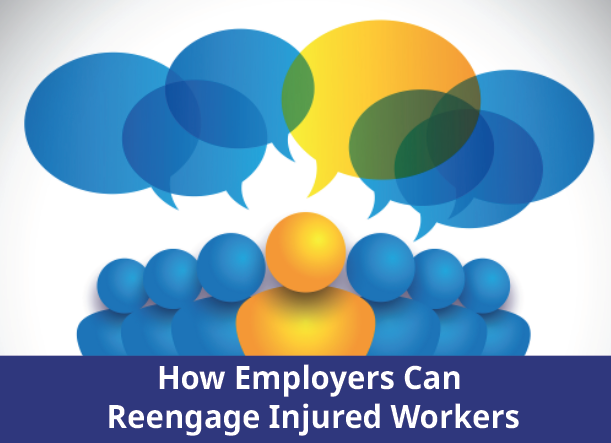
Reengaging an injured worker during their return to work depends on the culture embedded within an organization. We explore how consistent, compassionate leadership, paired with quality care and communication, can create a lasting impact.
Employee engagement can reduce costs, improve quality, and enhance morale in the workplace. When executed well, a reengagement strategy can also lead to lower absenteeism, higher productivity, and stronger employee loyalty. So, how can organizations help support these goals?
“Reengagement is not a program; it must be built into the foundation of a company’s culture for return-to-work success,” said Sean Fitzsimmons, Large Casualty Workers’ Compensation Claims Manager at Safety National. “When employees feel seen and supported, the entire culture of safety and wellness is strengthened.”
Below are elements to potentially include when building a culture of reengagement:
Foundational Leadership
Strong organizational leadership begins with a clear, consistent vision for employee health and well-being and ensuring that vision is effectively communicated. This includes setting expectations around both wellness and injury management.
Effective leaders make wellness and safety a part of everyday work life, not just an annual initiative. They demonstrate visible support for injured workers and the company’s return-to-work programs. The tone for care and engagement starts at the top, with leaders modeling empathy and integrity at every step and reinforcing key messages throughout the organization.
Building a Culture of Connection and Care
When injured employees feel heard, needed, and valued, their engagement remains strong, even during the recovery process. Active involvement and consistent communication from leadership reinforce an employee’s sense of belonging and purpose. Consider treating an injured employee as you would a newly hired employee. Where new employees continue to be trained and developed, the same standard is best applied to injured workers.
Regular check-ins to discuss progress demonstrate genuine care and help maintain connection. Leaders can also seek feedback on wellness and safety initiatives to foster inclusion. Celebrating small recovery milestones further shows employees that they are appreciated and supported on their journey back to work.
High-Quality Care and Recovery Management
Providing quality care is essential to the reengagement process. This begins with ensuring access to high-quality resources such as on-site medical care, nurse triage lines, and web-based health tools. Employers should partner with providers who prioritize patient communication and psychological support, while setting clear expectations and performance standards to ensure effective collaboration.
Continuous communication and early intervention can lead to faster and more positive outcomes. Employers should begin return-to-work discussions early and maintain frequent contact throughout recovery. Offering modified duty options can help an injured employee maintain a sense of normalcy. Ongoing communication among HR, management, and medical providers ensures a coordinated recovery process and helps identify barriers, including psychosocial factors, that may delay a successful return to work.
Originally published in Safety National’s Carrier Chronicles
Firefighter Criteria Changes Webinar
Join us at 9:30 a.m. on January 22 as we detail the new, standardized compliance process for firefighter criteria.
Renewal Policy Information
The new experience modification factors for the 2026-27 renewals will be available soon for members and agents through our online portal at www.IMWCA.org.
If you need assistance with your login, contact Andrew Justice.

Upcoming Virtual Round Table
Gain insights and share ideas in our quarterly virtual round tables. Each session features a short presentation followed by an open discussion. Submit your questions in advance to ensure a customized experience.
- February 10, 9:30 a.m. – The Burning Questions on Lithium Batteries
- Perfect for monthly safety meetings. All sessions are recorded.
Join TrueNorth on March 26-27 in Ankeny for OSHA training. The class will train entry-level workers in the recognition and avoidance of hazards in their workplace.

IMWCA University
Mark your calendar for IMWCA University, April 8-9 in Johnston. Training and networking designed for local government employees will include topics on safety programs, human resources, round table discussions and more. Registration Opening Soon!

