


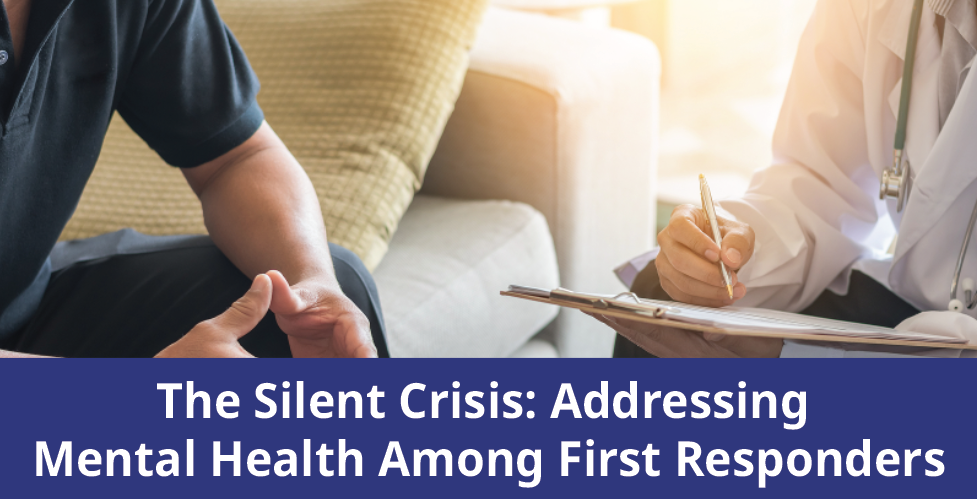
First responders dedicate their lives to protecting others.
It’s time we protect them, too
First responders – police officers, firefighters, emergency medical technicians (EMTs), and paramedics – are the backbone of public safety. They rush toward danger when others flee, often witnessing traumatic events that most people will never encounter. Yet behind the heroism lies a silent crisis: the mental health toll of their work.
A Stark Contrast in Mental Health Risks
Studies show that approximately 30% of first responders develop behavioral health conditions such as depression, anxiety, or post-traumatic stress disorder (PTSD), compared to about 20% in the general population. The nature of their jobs – frequent exposure to violence, disasters, and life-threatening situations – creates chronic stress that can lead to severe psychological consequences.
Suicide rates are particularly alarming. Research indicates that first responders are 1.5 times more likely to die by suicide than the general population. Among firefighters, nearly 47% report suicidal thoughts, and 15% have attempted suicide. Compare this to the general population, where 5–14% have suicidal thoughts and under 2% attempt suicide. Law enforcement officers face similar risks, with estimates suggesting 125–300 police suicides annually.
PTSD prevalence among first responders ranges from 8% to 20%, significantly higher than the 3.5% rate in the general population. Additionally, over 50% report symptoms of burnout, and about 25% report substance use disorders, often as a coping mechanism for job-related stress.
Why This Matters
The mental health of first responders is not just a personal issue – it’s a public safety concern. When these professionals struggle with untreated mental health conditions, it can impair judgment, reduce job performance, and increase the risk of errors in high-stakes situations. Moreover, the ripple effect extends to families and communities, as untreated trauma can lead to strained relationships, substance abuse, and even secondary trauma among loved ones.
Barriers to Care
Despite the high prevalence of mental health challenges, less than 30% of first responders receive adequate mental health support. Stigma remains a major barrier; many fear that seeking help will jeopardize their careers or be perceived as weakness. Cultural norms within emergency services often reinforce the idea that stress is “just part of the job,” discouraging open conversations about mental health.
Steps Toward Solutions
Addressing this crisis requires a multi-pronged approach:
- Destigmatization: Normalize mental health discussions within departments.
- Access to Care: Expand confidential counseling services and peer-support programs.
- Training: Implement mandatory mental health and resilience training for all first responders.
- Policy Support: Increase funding for programs under initiatives like the Law Enforcement Mental Health and Wellness Act and similar efforts for firefighters and EMS personnel.
First responders dedicate their lives to protecting others. It’s time we protect them, too – by prioritizing mental health resources, fostering supportive workplace cultures, and ensuring that seeking help is seen as a sign of strength, not weakness. Their well-being is essential not only for their own lives but for the safety and resilience of our communities.
Members of the IMWCA
In 2020, the Iowa Municipalities Workers Compensation Association (IMWCA) launched the First Responder Assistance Program as a FREE and CONFIDENTIAL resource for over 12,000 first responders, in addition to their spouses and dependents whose departments/agencies are members of the IMWCA. First responders include employees and volunteers who are law enforcement officers, firefighters, ambulance personnel, 911 dispatchers, correctional officers, emergency management and members of search and rescue teams. Members do not have to sign up for this benefit. If your department is a member of the IMWCA, you are automatically eligible for this benefit.
To access this resource, simply contact Connections EAP at 800-779-6125 or email info@connectionseap.com and let them know you are a member of the IMWCA.They will then connect you with a provider in your area.
Sources: [samhsa.gov] [cgi.edu] [wifitalents.com] [recordherald.com] [congress.gov]
IMWCA University
Registration is now open for IMWCA University, April 8-9, in Johnston. Training and networking designed for local government employees will include topics on safety programs, human resources, round table discussions and more.
A Small Thing Becomes a Big Problem
Last fall, we observed a developing claims trend that we believe is important to share with our members. During the late summer and early fall, several members were engaged in storm cleanup and general tree maintenance activities. As part of that work, employees were loading whole branches into truck beds or trailers for transport to burn piles.
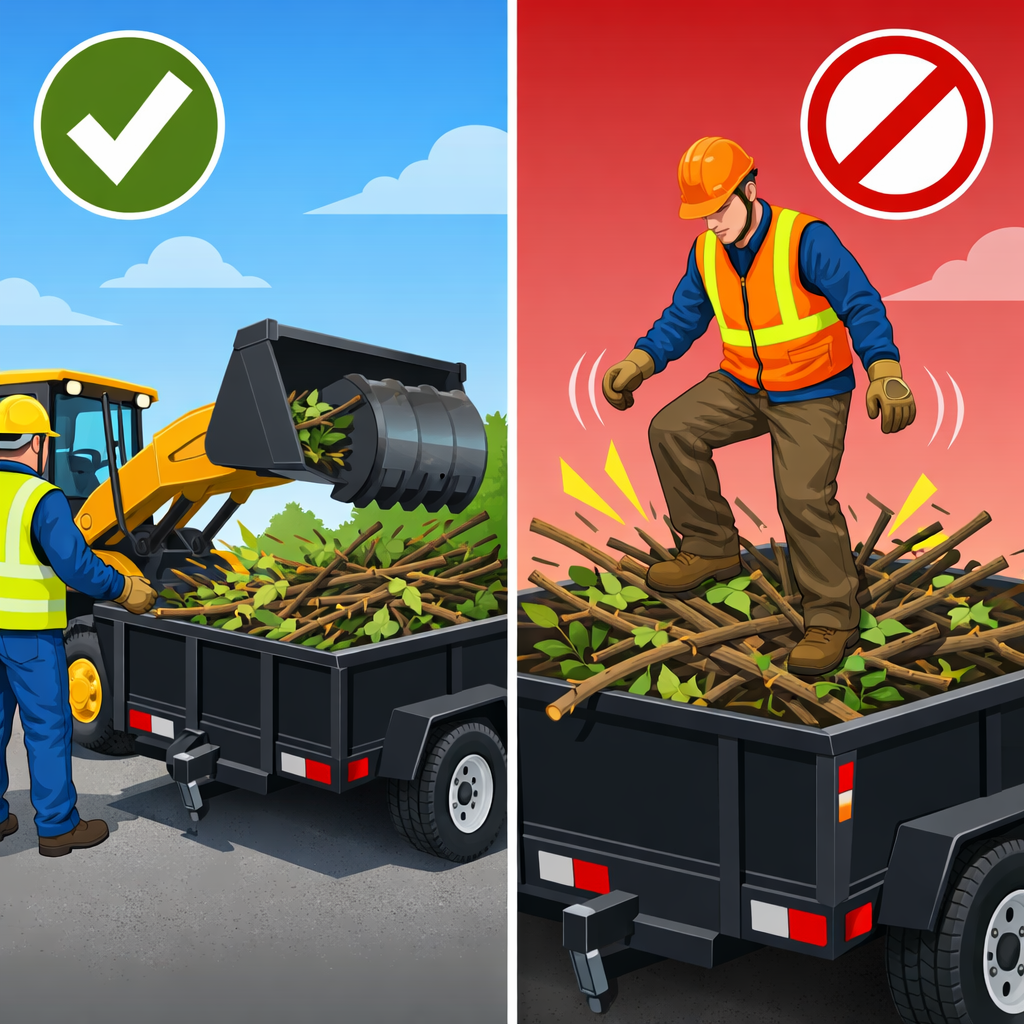
In some cases, employees climbed onto the brush to compact it in order to fit more material onto the trailer. During these efforts, loads shifted unexpectedly, resulting in several severe injuries to knees, backs, and shoulders.
While this practice — often referred to as “brush stomping” — may feel like an efficient way to maximize each load, the increasing number of injuries associated with manually compacting branches highlights the need to reconsider this approach.
Safer alternatives to brush stomping include:
- Using a grinder to convert brush to mulch when possible.
- Using an end-loader or backhoe bucket to compress materials.
- Loading what can safely fit without manual compaction and making an additional trip if needed.
Although these options may require additional time or equipment, the severity and frequency of injuries related to brush stomping make it worthwhile to explore safer methods.
2026-2027 Payroll Updates
Your IMWCA payroll worksheet for the upcoming 2026-2027 policy renewal is now available. Complete the payroll worksheet electronically by logging into your Member Login at www.imwca.org. There is also a direct link to the login page at https://imwcaapps.imwca.org/IMWCA_Member_Access/Login.aspx. This form needs to be returned by March 31.
Providing accurate payroll information helps ensure your estimated premium is as accurate as possible. The worksheet lists estimated payrolls for 2026-2027, which were determined by increasing the 2024-2025 audited payrolls by 3%. For new IMWCA members, the pre-audit 2025-2026 estimated figures were used for the worksheet.
Thank you for choosing IMWCA for your workers’ compensation needs! We are proud to be your partner in helping your employees return home safely. If you are new to our online system or need help with your login, please contact Aric Cudnohosky at ariccudnohosky@iowaleague.org or Andrew Justice at andrewjustice@iowaleague.org.
Company Nurse QR Codes
Utilizing the Company Nurse QR code is an efficient way for members to initiate a claim. However, please be advised that a report is not finalized until the employee speaks directly with a Company Nurse representative.
Neither the member nor IMWCA will receive notification of the claim until this telephonic consultation is complete. To ensure filing is complete, please remind employees that they must answer follow-up calls—which may appear as an Arizona area code or an unidentified number—to conclude the reporting process with Company Nurse.
If you have any questions, please contact your Safety and Risk Improvement Advisor.

